The shift from traditional glass to polycarbonate sheets is transforming how Saudi Arabia builds its most demanding projects — and the reasons go far beyond cost.
When you walk through King Abdullah Sports City in Jeddah or visit the state-of-the-art greenhouses in AlUla, you're looking at a material revolution that's quietly reshaping Saudi construction standards. Polycarbonate sheets, once seen as a budget alternative to glass, have become the preferred specification for architects and engineers working on the Kingdom's most ambitious projects.
Here's why.
The Saudi Climate Challenge
Saudi Arabia's construction environment presents challenges that traditional glass was never designed to handle at scale.
Summer temperatures regularly exceed 50°C. UV radiation levels rank among the highest globally. Sandstorms create impact scenarios that would shatter conventional glazing. And the push toward Vision 2030 megaprojects demands materials that can perform reliably for decades under these extreme conditions.
Glass can meet some of these requirements — but only with significant compromises in weight, cost, and installation complexity. Polycarbonate sheets solve the equation differently.
Impact Resistance That Changes Project Economics
The numbers tell the story clearly.
For projects like stadium roofing, commercial skylights, and transportation hubs, this isn't just a performance metric — it's a fundamental shift in project risk. Consider a typical skylight installation in Riyadh:
- Glass requires structural reinforcement to handle wind loads and potential impact
- Installation teams need specialized lifting equipment for panels that can weigh 40–60 kg per square meter
- Breakage during installation creates delays and material waste
- Long-term replacement cycles build ongoing maintenance costs into facility budgets
Polycarbonate eliminates most of these pain points. Panels weigh a fraction of equivalent glass. Installation crews can handle larger sections with standard equipment. And the material's flexibility absorbs impacts that would catastrophically fail rigid glass panels. The result: lower upfront costs, faster installation timelines, and reduced long-term facility management expenses.
Thermal Performance in Extreme Heat
Saudi Arabia's energy consumption for cooling represents one of the highest per-capita rates globally. Any building material that touches the thermal envelope directly impacts operational costs for decades.
This is where polycarbonate's engineering properties create measurable value. Solid polycarbonate sheets offer lower thermal conductivity than standard glass, and their ability to be specified with solar-control tints and UV-filtering coatings directly reduces solar heat gain through the building envelope. Unlike glass, solid PC does not require expensive low-e coatings or gas fills to achieve meaningful thermal performance — the material's inherent properties do the work.
UV Resistance Built Into the Material
The Saudi sun doesn't just create heat — it delivers UV radiation that degrades unprotected materials within months. Early-generation plastics yellowed, became brittle, and failed quickly in Saudi conditions. This history created skepticism about polymer-based building materials that persists in some quarters today.
Modern polycarbonate sheets are fundamentally different products. UV-protective coatings are applied during manufacturing, creating a barrier that's molecularly bonded to the sheet surface. This isn't a film that can peel or degrade — it's an integrated protection system designed to maintain optical clarity and structural integrity for 10–15 years under direct Saudi sun exposure.
For architects specifying materials for projects with 20–30 year design lives, this durability matters. The material needs to perform consistently, not just survive.
Design Flexibility That Glass Cannot Match
Walk through any Vision 2030 megaproject and you'll see architectural forms that would have been prohibitively expensive or structurally impossible with traditional glass — curved facades, sculptural canopies, complex geometric skylights.
Polycarbonate's thermoformability allows manufacturers to create custom shapes that eliminate the need for complex framing systems. What would require dozens of individual glass panels, each cut to specification and fitted into engineered frames, can often be accomplished with a single continuous polycarbonate panel formed to exact project requirements. This flexibility doesn't just reduce material costs — it compresses installation timelines and creates cleaner aesthetic lines that glass-and-frame systems struggle to achieve.
The ISO 9001 Factor: Quality in Saudi Manufacturing
As Saudi Arabia builds domestic manufacturing capacity under Vision 2030, the availability of locally-produced, certified polycarbonate sheets changes project economics. Facilities like APIC's Jeddah plant produce polycarbonate to ISO 9001 standards, providing Saudi contractors with:
- Reduced import lead times that compress project schedules
- Eliminated currency exchange risk on long-term material contracts
- Technical support from manufacturers who understand local installation conditions
- Simplified logistics that reduce the carbon footprint of material procurement
For large-scale projects, the ability to source high-performance materials domestically isn't just convenient — it's a strategic advantage that affects everything from initial bidding to final project delivery.
Real-World Applications Across Saudi Projects
The shift to polycarbonate isn't theoretical. It's happening across project types:
Stadium roofing systems that provide weather protection while maintaining natural light levels for turf management and spectator comfort.
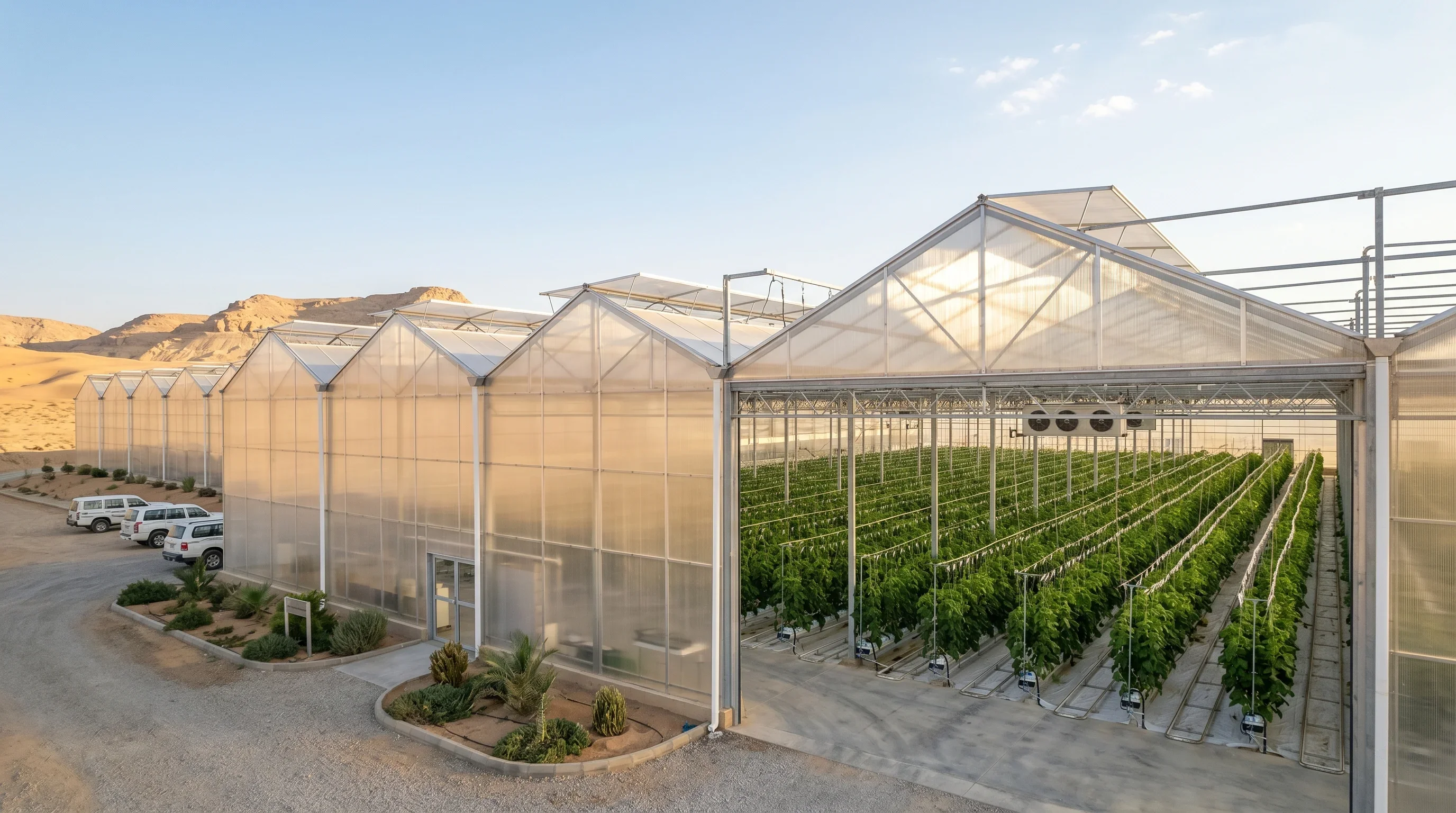
Commercial greenhouses that create controlled growing environments while managing the extreme temperature swings between Saudi day and night cycles.
Bus shelters and transit station canopies that withstand impact while reducing maintenance cycles.
Office building skylights and atrium roofing that bring natural light deep into floor plates without creating thermal problems.
Warehouse roofing systems that provide daylighting to reduce energy costs while maintaining structural durability.
Each application represents a decision point where project teams evaluated glass, ran the numbers, and concluded that polycarbonate delivered better long-term value.
What This Means for Saudi Construction
The move toward polycarbonate isn't about replacing glass in every application. High-end residential projects, certain commercial facades, and specific architectural applications will continue to specify glass for valid reasons.
But for the growing category of projects where performance, durability, and total cost of ownership drive material selection, polycarbonate has moved from alternative to preferred specification. As Saudi Arabia continues its construction boom under Vision 2030, expect to see this trend accelerate. The material works. The economics work. And increasingly, the local supply chains exist to support large-scale adoption.
For contractors, architects, and project developers working in the Kingdom, understanding when and why to specify polycarbonate over glass isn't just about following a trend — it's about making decisions that create long-term project value.
Looking for polycarbonate solutions for your next Saudi project?
APIC manufactures ISO 9001 certified polycarbonate sheets at our Jeddah facility, serving contractors and developers across Saudi Arabia. Contact our technical team to discuss your project requirements.
